

Buy Ambien Online for Insomnia by Depressive Disorder
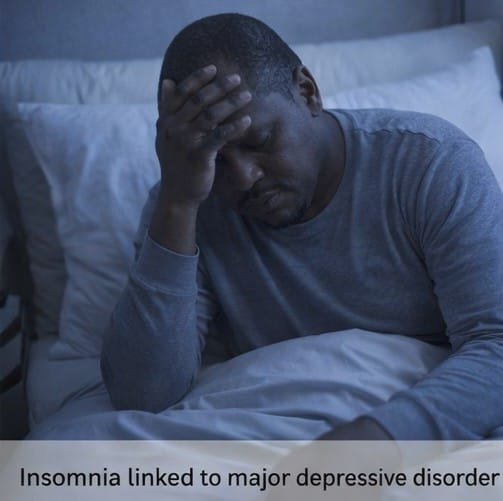
The relationship between insomnia and major depressive disorder is one of the most clinically significant and bidirectionally complex comorbidities in all of medicine. Sleep disturbance is present in over ninety percent of patients with major depressive disorder at some point during their illness, and is among the most prominent, most distressing, and most functionally impairing symptoms that depressed patients report. The insomnia of depression is not simply a symptom that will resolve when the underlying mood disorder improves — it has its own neurobiological underpinnings, its own perpetuating mechanisms, and its own clinical management requirements that demand specific attention alongside the treatment of the mood disorder itself. More critically, the relationship between insomnia and depression is bidirectional and mutually amplifying: insomnia is not only a symptom of depression but one of its most potent risk factors and perpetuating mechanisms, with population studies consistently demonstrating that persistent insomnia doubles the risk of developing major depressive disorder and dramatically increases the risk of depressive relapse following successful remission.
The clinical implications of this bidirectional relationship are profound: treating the mood disorder alone, without simultaneously addressing the insomnia, produces inferior antidepressant outcomes — incomplete remission, faster relapse, and persistent functional impairment — compared to treating both conditions concurrently. This evidence base supports the integration of targeted sleep disorder management, including prescription hypnotic therapy when indicated, into the comprehensive treatment plan for major depressive disorder. Patients with major depressive disorder and comorbid insomnia who are evaluated by their psychiatrist or primary care physician and who explore how to buy Ambien online with medical prescription or how to purchase Lunesta with a valid prescription as adjunctive sleep management within their depression treatment should engage with providers who are managing both conditions in an integrated fashion rather than treating insomnia as a secondary concern.
Neurobiological Links Between Depression and Insomnia
The neurobiological connections between major depressive disorder and insomnia are deep and multidirectional, involving shared dysregulation of the monoaminergic neurotransmitter systems, the hypothalamic-pituitary-adrenal axis, and the circadian clock mechanisms that coordinate the timing and architecture of sleep. Serotonergic dysfunction — central to the neurobiology of depression — directly impacts sleep architecture through serotonin’s role as a precursor to melatonin synthesis, its modulation of the rapid eye movement sleep-generating cholinergic circuits in the brainstem, and its influence on the slow-wave sleep regulatory systems of the thalamus. The reduced serotonergic tone of major depressive disorder produces characteristic polysomnographic changes including prolonged sleep onset latency, reduced slow-wave sleep, shortened rapid eye movement sleep latency, and increased rapid eye movement sleep density — a signature sleep architecture profile that both reflects the underlying neurobiological depression and maintains the waking symptoms of fatigue, cognitive impairment, and emotional dysregulation that impair daytime functioning.
The hypothalamic-pituitary-adrenal axis hyperactivation that characterizes major depressive disorder contributes to insomnia through the wake-promoting effects of elevated cortisol, which maintains the ascending arousal system in a state of heightened activity that counteracts the normal evening downregulation of alertness required for sleep initiation. The circadian dysregulation of cortisol secretion in depression — with abnormal phase advance or blunting of the normal diurnal cortisol profile — produces a physiological environment that is incompatible with normal sleep-wake cycling. Inflammatory mediators including interleukin-6 and tumor necrosis factor alpha, which are elevated in major depressive disorder and which directly modulate sleep regulatory circuits in the hypothalamus and brainstem, provide additional neurobiological links between the mood disorder and its sleep consequences.
Antidepressant Effects on Sleep Architecture
The effects of antidepressant medications on sleep architecture are complex, varied by drug class, and often clinically counterproductive in the short term despite their eventual benefits for the mood disorder. Selective serotonin reuptake inhibitors — the most commonly prescribed antidepressant class — acutely suppress rapid eye movement sleep, increase sleep onset latency, reduce total sleep time, and increase nighttime awakenings in the early weeks of treatment, temporarily worsening the insomnia that is already a prominent symptom of the underlying depression. This antidepressant-related sleep disruption, while typically transient, can significantly impair adherence to antidepressant therapy if patients are not forewarned and if concurrent sleep management strategies are not implemented.
Sedating antidepressants — including mirtazapine, trazodone, doxepin, and amitriptyline — improve sleep as a direct effect of their histaminergic and serotonergic antagonism, making them pharmacologically rational choices for depressed patients with prominent insomnia. However, their sedating properties may be disadvantageous in patients whose depressive profile includes significant fatigue and cognitive slowing, and their primary prescribing indication remains the mood disorder rather than the insomnia. For patients receiving non-sedating antidepressants whose insomnia persists despite mood improvement, adjunctive prescription hypnotic therapy — using zolpidem, eszopiclone, or zopiclone at appropriate doses — addresses the residual sleep disturbance that antidepressant therapy does not adequately resolve. Patients exploring order Lunesta online prescription service options for adjunctive insomnia management within their depression treatment should ensure their managing psychiatrist or physician is aware of and supportive of this addition to their pharmacological regimen.
Targeted Sleep Pharmacotherapy in Depressed Patients
The prescription of hypnotic medications for insomnia comorbid with major depressive disorder requires consideration of the specific pharmacological interactions between hypnotics and antidepressants, the potential for the hypnotic to influence mood symptoms beyond its direct sleep effects, and the risk of additive central nervous system depression that may impair daytime functioning in patients already experiencing the cognitive and energy deficits of depression. Eszopiclone has specifically studied efficacy in comorbid insomnia and depression in a landmark randomized trial demonstrating that co-administration with fluoxetine produced significantly greater improvements in both sleep outcomes and secondary depression rating scale scores compared to fluoxetine plus placebo, suggesting that the sleep improvement itself contributes to antidepressant response through the neurobiological restoration that adequate sleep enables.
Zolpidem, zopiclone, and low-dose doxepin are additional prescription options for depression-related insomnia, each with distinct pharmacokinetic profiles and evidence bases that guide selection based on the specific insomnia phenotype and the patient’s individual clinical characteristics. Patients who buy zopiclone online with medical prescription or who purchase Ambien with valid prescription as adjunctive sleep management within their depression treatment should understand that these medications are intended as short-to-medium-term adjuncts while antidepressant therapy reaches its full effect and cognitive behavioral therapy for insomnia is established, rather than as indefinite maintenance treatments that replace the longer-lasting benefits of non-pharmacological sleep management.
Cognitive Behavioral Therapy for Insomnia in Depression
Cognitive behavioral therapy for insomnia adapted for patients with comorbid major depressive disorder addresses both the behavioral and cognitive perpetuating factors of insomnia and the depression-specific cognitive patterns — rumination, catastrophizing about sleep, and negative self-attribution — that are particularly prominent in this population. The sleep restriction component of cognitive behavioral therapy for insomnia — temporarily limiting time in bed to the actual sleep time to consolidate sleep and rebuild sleep drive — requires careful modification in depressed patients, as excessive sleep restriction can temporarily worsen mood in patients with depression-related energy deficits. Experienced cognitive behavioral therapists working with depressed insomnia patients typically use a more gradual sleep restriction protocol that minimizes the risk of mood worsening while still providing the sleep consolidation benefit.
Mindfulness-based cognitive therapy, which combines mindfulness meditation principles with cognitive therapy approaches specifically validated for depression relapse prevention, has demonstrated promising efficacy for both the insomnia and mood components of major depressive disorder and may be particularly well-suited to patients who have struggled with standard cognitive behavioral therapy for insomnia. The integration of mindfulness practices into the behavioral sleep management approach addresses the hyperarousal and rumination that are central maintaining mechanisms for both conditions simultaneously, providing therapeutic benefits across both the sleep disorder and the mood disorder that purely sleep-focused interventions do not replicate.