

Post Traumatic Stress Disorder and Sleep
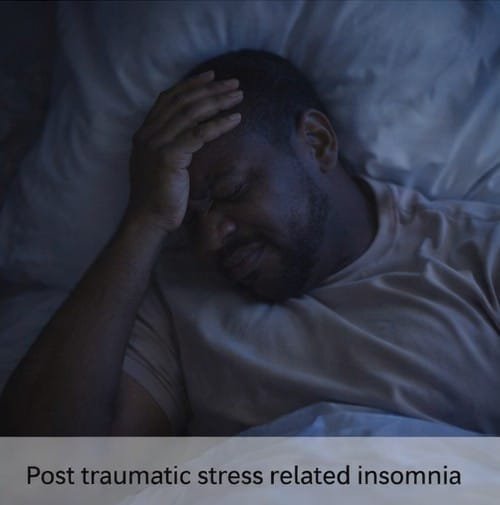
Post traumatic stress disorder produces some of the most severe and treatment-refractory sleep disturbances encountered in clinical sleep medicine and psychiatric practice. The sleep symptoms of post-traumatic stress disorder — including difficulty falling asleep, severe sleep maintenance insomnia, trauma-related nightmares, nocturnal hyperarousal, and in some patients complex nocturnal behaviors related to dream enactment — are not peripheral symptoms of the disorder but are central to its pathophysiology, its maintenance, and its broader clinical consequences. Epidemiological and clinical research consistently demonstrates that sleep disturbance in post-traumatic stress disorder is one of its most prevalent symptoms, affecting over ninety percent of patients with the full diagnosis, and one of its most persistent, frequently remaining elevated long after other post-traumatic stress disorder symptoms have partially remitted with treatment.
The nightmares of post-traumatic stress disorder — which replay traumatic memories with intense emotional content, producing profound sleep disruption and anticipatory anxiety about sleep itself — represent a particularly distressing and clinically significant component of the sleep disturbance that requires specific pharmacological and psychological targeting beyond general insomnia management. Patients with post-traumatic stress disorder-related insomnia who cannot achieve adequate sleep with behavioral strategies alone, and who are evaluated by their treating psychiatrist for pharmacological sleep management, may explore how to buy Ambien with medical prescription or how to order Lunesta online with doctor consultation for the non-nightmare components of their sleep disturbance alongside nightmare-specific medications. Those who have learned how to purchase zopiclone online with a valid prescription through licensed telehealth mental health platforms note the importance of accessing services where providers understand the specific sleep pathology of post-traumatic stress disorder rather than approaching it as generic insomnia.
Neurobiological Mechanisms of PTSD Sleep Disturbance
The sleep disturbance of post-traumatic stress disorder reflects the fundamental neurobiological dysregulation of the threat processing and fear extinction systems that defines the disorder at the molecular and circuit level. The amygdala — the brain’s threat detection center — shows persistent hyperreactivity to threat-related and safety stimuli in post-traumatic stress disorder, generating excessive fear responses to cues associated with the traumatic event and maintaining a generalized state of heightened vigilance that is incompatible with the parasympathetic downregulation that sleep requires. This amygdala hyperreactivity does not diminish at night but continues during sleep, where it appears to influence the content and emotional intensity of dream processing in ways that produce the vivid, distressing trauma-related nightmares that are the cardinal sleep symptom of post-traumatic stress disorder.
The prefrontal cortex — which normally provides inhibitory top-down control over amygdala activity, suppressing inappropriate fear responses when threat assessment determines the environment is safe — shows reduced functional connectivity with the amygdala in post-traumatic stress disorder, impairing the fear extinction and safety learning that would otherwise allow the traumatic memory to be processed and placed into appropriate context. During sleep — and particularly during rapid eye movement sleep, when prefrontal activity is further reduced relative to waking — this inhibitory failure allows the amygdala to express fear responses to trauma-related dream content without the regulatory influence that waking cortical processing provides, producing the intense nightmare experiences that awaken post-traumatic stress disorder patients in states of terror, physical hyperarousal, and prolonged difficulty returning to sleep.
The noradrenergic system, which mediates the sympathetic arousal component of the fear response, shows evidence of chronic dysregulation in post-traumatic stress disorder, with elevated nighttime norepinephrine levels driving the sleep fragmentation, frequent awakenings, and exaggerated startle responses that characterize post-traumatic stress disorder sleep. This noradrenergic hyperactivation provides the pharmacological rationale for prazosin — an alpha-1 adrenergic receptor blocker — as a nightmare-specific treatment in post-traumatic stress disorder, as its blockade of noradrenergic signaling during sleep reduces the sympathetically mediated arousal that generates and perpetuates trauma nightmares.
Pharmacological Management of PTSD Insomnia
The pharmacological approach to post-traumatic stress disorder-related sleep disturbance requires a differentiated strategy that addresses the distinct components of the sleep pathology — sleep initiation difficulty, sleep maintenance insomnia, and trauma nightmares — through complementary pharmacological mechanisms. Prazosin has the strongest evidence base specifically for trauma nightmares and is the most recommended pharmacological intervention for the nightmare component of post-traumatic stress disorder sleep disturbance; its effects on non-nightmare insomnia are more modest and variable. Sertraline and paroxetine — the FDA-approved antidepressants for post-traumatic stress disorder — improve sleep as part of their broader post-traumatic stress disorder symptom reduction, though their selective serotonin reuptake inhibiting mechanism may also temporarily suppress rapid eye movement sleep and initially worsen sleep maintenance in some patients.
For the non-nightmare insomnia components of post-traumatic stress disorder sleep disturbance — the difficulty falling asleep driven by hyperarousal and the fragmented sleep maintenance that persists even on nights without nightmares — targeted hypnotic therapy with Z-drug agents may be clinically appropriate as an adjunct within the post-traumatic stress disorder treatment plan. Patients prescribed zolpidem, eszopiclone, or zopiclone for post-traumatic stress disorder-related insomnia should be monitored specifically for any exacerbation of complex sleep behaviors — including parasomnias and sleep-related dissociative episodes — that can occur in trauma survivors with pre-existing parasomnia vulnerability. Those who buy Ambien online treatment options through licensed mental health telehealth services for post-traumatic stress disorder insomnia management should ensure their prescribing provider is aware of their full post-traumatic stress disorder treatment context and is actively monitoring for the interactions between hypnotic medications and post-traumatic stress disorder symptoms.
Psychological Treatments for PTSD-Related Sleep Disturbance
Image rehearsal therapy — a cognitive behavioral treatment specifically targeting trauma nightmares — has the most robust evidence base of any psychological intervention for post-traumatic stress disorder sleep disturbance. The technique involves the patient selecting a recurrent distressing nightmare, consciously modifying its content during waking hours in any way they choose, and then mentally rehearsing the modified dream scenario repeatedly throughout the day. This voluntary rehearsal of the altered dream content appears to compete with the automatic retrieval of the traumatic nightmare during subsequent sleep, reducing nightmare frequency and severity through mechanisms related to memory reconsolidation and competing memory trace formation.
Cognitive processing therapy and prolonged exposure therapy — the two most evidence-based psychological treatments for post-traumatic stress disorder overall — produce meaningful improvements in sleep quality as secondary outcomes alongside their primary effects on post-traumatic stress disorder symptom severity, consistent with the understanding that sleep disturbance in post-traumatic stress disorder is driven by the same underlying trauma memory dysregulation that produces daytime post-traumatic stress disorder symptoms. Patients receiving evidence-based post-traumatic stress disorder psychotherapy who use purchase Ambien with valid prescription or order Lunesta online healthcare consultation as adjunctive sleep support during the active treatment phase should view pharmacological sleep management as a bridge that supports their capacity to engage with the intensive psychological work of trauma therapy rather than as an indefinite management strategy independent of the underlying disorder treatment.
Sleep Hygiene and Environmental Modifications
Environmental and behavioral sleep hygiene modifications are particularly important in post-traumatic stress disorder-related insomnia, as the bedroom environment and pre-sleep behavioral patterns may have acquired conditioned associations with the hyperarousal and threat responses of the disorder that perpetuate sleep avoidance and anxiety independently of the core post-traumatic stress disorder symptoms. Patients who have experienced trauma-related nightmares in a specific sleeping environment may develop conditioned arousal responses to that environment that maintain insomnia even when nightmare frequency has been reduced by pharmacological or psychological treatment. Room modifications that reduce the environmental similarity to trauma contexts, attention to bedroom safety and security that addresses trauma-related hypervigilance about environmental threat, and the use of white noise or other masking sounds to reduce startle-provoking acoustic cues during sleep can produce clinically meaningful improvements in sleep quality that supplement pharmacological and psychological treatment.