

Purchase Lunesta for Severe Chronic Insomnia
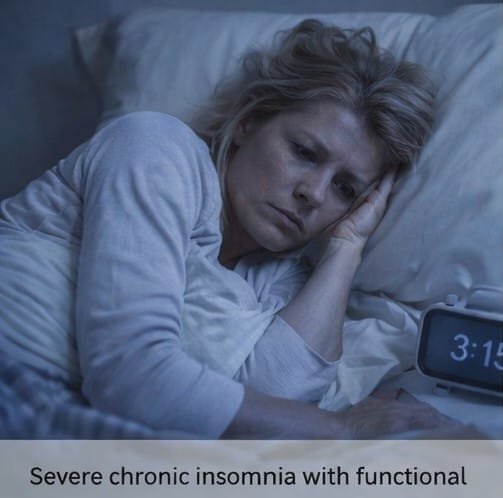
Chronic insomnia disorder is one of the most prevalent and yet most persistently undertreated conditions in modern medicine, affecting an estimated ten to fifteen percent of the adult population with clinically significant, functionally impairing sleep disturbance that meets formal diagnostic criteria. The hallmarks of chronic insomnia — difficulty initiating sleep, difficulty maintaining sleep, or early morning awakening occurring at least three nights per week for at least three months, accompanied by meaningful daytime impairment — produce a cascade of consequences that extends far beyond the bedroom. Patients with severe chronic insomnia experience impaired concentration, memory consolidation deficits, slowed reaction times, emotional dysregulation, reduced occupational performance, and a progressive deterioration of physical and psychological health that parallels and often accelerates the development of comorbid conditions including depression, anxiety, cardiovascular disease, and metabolic dysfunction.
The functional impairment dimension of chronic insomnia is what elevates it from a nuisance to a medical condition demanding systematic clinical attention. When sleep deprivation accumulates over months and years of inadequate rest, the cognitive, emotional, and physical consequences become self-perpetuating — the hyperarousal and cognitive misattributions about sleep that perpetuate insomnia are themselves amplified by sleep deprivation, creating an increasingly entrenched disorder that resists simple behavioral interventions. Prescription sleep medications occupy an important role in the management of severe chronic insomnia, particularly when non-pharmacological approaches have been insufficient or when the degree of functional impairment demands rapid clinical response. Patients evaluated by their physician for severe chronic insomnia who are considering how to buy Ambien with medical prescription through licensed pharmacy channels, or who explore how to purchase Lunesta online with a valid prescription following a physician evaluation, should ensure that any prescribing arrangement involves a qualified clinician who has conducted a thorough sleep disorder assessment.
Neurobiological Basis of Chronic Insomnia
The neurobiological underpinnings of chronic insomnia disorder involve a complex interaction between hyperarousal of the central nervous system, dysregulation of the circadian sleep-wake regulatory system, and maladaptive cognitive and behavioral factors that together create a self-sustaining cycle of sleeplessness. The hyperarousal model of insomnia — the most empirically supported neurobiological framework — posits that patients with chronic insomnia exhibit elevated physiological, cognitive, and cortical arousal relative to normal sleepers, both during the night and throughout the waking day, that prevents the normal downregulation of alerting system activity required for sleep initiation and maintenance.
Neuroimaging studies using positron emission tomography have demonstrated higher glucose metabolism during sleep in the wake-promoting regions of the brain — including the ascending arousal system structures of the brainstem and hypothalamus, the amygdala, and the prefrontal cortex — in patients with primary insomnia compared to normal sleepers, providing objective metabolic evidence of the neural hyperarousal that is the functional substrate of the subjective complaint. Electroencephalographic studies consistently demonstrate elevated high-frequency beta wave activity during the pre-sleep and early sleep periods in insomnia patients, reflecting cortical hyperarousal that interferes with the normal transition into the restorative slow-wave sleep stages.
The gamma-aminobutyric acid inhibitory system, which is the principal neurochemical mediator of the transition from wakefulness to sleep, shows evidence of reduced functional efficiency in chronic insomnia, with reduced GABA levels demonstrated in magnetic resonance spectroscopy studies of the occipital cortex and other brain regions. This GABAergic insufficiency is the primary pharmacological target of the benzodiazepine receptor agonist class of sleep medications — including zolpidem (Ambien), eszopiclone (Lunesta), and zopiclone — which enhance GABA-A receptor activity to suppress the excessive neural firing maintaining wakefulness and hyperarousal.
Prescription Sleep Medications: Mechanisms and Options
The benzodiazepine receptor agonists, commonly termed Z-drugs due to their names beginning with the letter Z, represent the most widely prescribed class of hypnotic medications for chronic insomnia and include zolpidem, eszopiclone, zopiclone, and zaleplon. These agents bind to the benzodiazepine site on the GABA-A receptor complex, enhancing chloride ion channel opening in response to GABA binding and thereby increasing inhibitory neurotransmission throughout the central nervous system. Unlike traditional benzodiazepines, which act across all subtypes of the GABA-A receptor complex, the Z-drugs preferentially bind to GABA-A receptors containing the alpha-1 subunit — which is most densely expressed in the sleep-promoting regions of the ventrolateral preoptic nucleus — producing more selective hypnotic effects with less anxiolytic, muscle-relaxant, and amnestic activity than benzodiazepines at comparable hypnotic doses.
Zolpidem — marketed as Ambien and available in immediate-release, extended-release, and sublingual formulations — is the most prescribed sleep medication in the United States and has extensive clinical evidence supporting its efficacy for sleep onset latency reduction and sleep maintenance improvement. Patients who are prescribed zolpidem and who access order Ambien online prescription service options through licensed telehealth insomnia clinics should understand the formulation-specific differences in pharmacokinetic profile that make certain formulations more appropriate for specific insomnia phenotypes: immediate-release for sleep initiation problems, extended-release for sleep maintenance difficulties, and sublingual for middle-of-the-night awakening. Eszopiclone — marketed as Lunesta — is the only Z-drug with FDA approval for long-term use without a duration restriction, a distinction reflecting its particular evidence base for sustained efficacy across six to twelve month treatment periods without the tolerance development that limits extended use of other Z-drugs.
Clinical Assessment and Prescribing Considerations
The appropriate prescribing of Z-drug hypnotics for severe chronic insomnia requires a comprehensive baseline assessment that characterizes the insomnia phenotype, identifies contributing and perpetuating factors, screens for comorbid sleep disorders that require independent treatment, and establishes the functional impairment that justifies prescription-level intervention. The phenotypic classification of insomnia — distinguishing predominant sleep onset insomnia, sleep maintenance insomnia, early morning awakening, or combined presentations — guides the selection of hypnotic agent and formulation, as different medications and formulations have different pharmacokinetic profiles optimized for different phases of the night.
Screening for obstructive sleep apnea is an essential component of insomnia evaluation before hypnotic prescribing, as Z-drugs may suppress the arousal responses that partially protect against oxygen desaturation during apnea events, potentially worsening untreated obstructive sleep apnea. Patients with clinically significant symptoms of obstructive sleep apnea — loud snoring, witnessed apneas, excessive daytime sleepiness disproportionate to the reported sleep difficulty — should undergo polysomnographic evaluation before hypnotic medication is initiated. Patients exploring how to buy Lunesta online with valid prescription through telehealth insomnia services should access platforms that conduct this obstructive sleep apnea screening as a component of their clinical evaluation protocol.
Cognitive Behavioral Therapy and Pharmacological Integration
Cognitive behavioral therapy for insomnia — the structured behavioral and cognitive intervention consisting of sleep restriction therapy, stimulus control, relaxation techniques, and cognitive restructuring — is established as the most effective long-term treatment for chronic insomnia, with meta-analyses demonstrating remission rates of forty to sixty percent and improvements that are maintained at long-term follow-up without the risks associated with indefinite pharmacological treatment. International sleep medicine guidelines from the American Academy of Sleep Medicine, the European Sleep Research Society, and the British Association for Psychopharmacology consistently recommend cognitive behavioral therapy as the first-line treatment for chronic insomnia, with pharmacological treatment recommended as an adjunct when rapid symptom relief is needed or when cognitive behavioral therapy alone has been insufficient.
The integration of Z-drug hypnotic therapy with cognitive behavioral therapy produces better short-term outcomes than either approach alone and — when the pharmacological component is gradually tapered as the behavioral therapy takes effect — produces better long-term outcomes than either continuous pharmacological treatment or delayed behavioral treatment. This stepped care model, beginning with combined pharmacological and behavioral treatment for rapid initial response and transitioning to behavioral therapy maintenance as sleep normalizes, represents the optimal clinical approach for severe chronic insomnia with significant functional impairment. Patients purchasing zopiclone or Ambien with valid medical prescription as part of this combined approach should engage actively with the behavioral therapy component rather than relying exclusively on pharmacological management.
Long-Term Safety and Monitoring
The long-term use of Z-drug hypnotics requires structured monitoring addressing efficacy, adverse effects, tolerance development, and the continued clinical justification for ongoing prescription. Falls and fractures — particularly in older adults for whom Z-drug-related psychomotor impairment and next-morning sedation produce significant fall risk — represent the most clinically significant safety concern with prolonged Z-drug use and require regular assessment in any patient on ongoing hypnotic therapy. The FDA has issued specific warnings regarding complex sleep behaviors — including sleep-driving, sleep-walking, and other parasomnias — occurring in Z-drug users, mandating explicit patient education about these risks at initiation and at each prescription renewal. Regular reassessment of the continuing clinical justification for prescription hypnotics, with consideration of cognitive behavioral therapy intensification, alternative pharmacological approaches, or supervised medication tapering at appropriate intervals, ensures that patients are not maintained on chronic hypnotic therapy by default rather than by active clinical decision.